Dr Anthony (Tony) Irvine Adams AM
(1936 - 2025)
26 August 2025
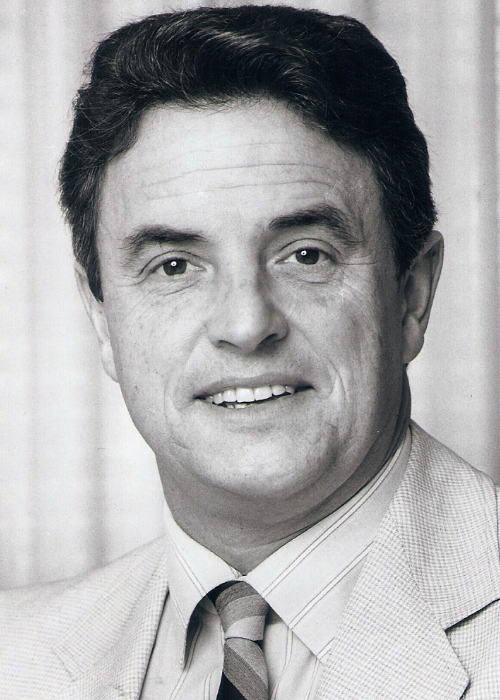
Dr Tony Adams AM in 1987, while NSW Chief Health Officer
The public health community is mourning the loss of Dr Anthony (Tony) Irvine Adams AM, and celebrating his decades’ long efforts in protecting and promoting public health in Australia and globally.
Tony was a founder in the late 1960s of the antecedents of the Public Health Association of Australia, and Australasian Epidemiological Association, and joked at the PHAA’s 50th anniversary celebrations in 2019 that he was its “midwife”.
He maintained an ongoing and active interest in the PHAA’s activities throughout his life, and people working in public health and epidemiology more broadly.
“We are saddened by the loss of a genuine hero and pioneer of public health in Australia,” PHAA CEO, Adj Prof Terry Slevin, said.
“Tony was one of the founders of PHAA and held various key roles in its early establishment.
“Tony remained engaged with and committed to PHAA and public health in Australia long into his retirement.
“Only two months ago Tony emailed me offering views on developments in the USA, and enthusiasm for the impending Australian CDC.
“He was always sage, supportive, and considered. But held the fire in the belly for public health his entire adult life.
“My deepest condolences to his family and all who loved him. We all are a little diminished by his loss, but we are far more enriched for his contributions in life.”
Tony Adams had a distinguished career in Australia and overseas. He was a Chief Health Officer of NSW, and then Chief Medical Officer for the Commonwealth during the HIV/AIDS outbreak in the 1980s. He served in those senior roles between 1983 and 1997.
He played a lead role in responding to the HIV/AIDS virus and the many complex social and political issues that emerged with it. He championed engagement with the gay and sex worker communities in NSW and nationally, and was at the forefront of efforts to treat the issue as a public health emergency that required an evidence-based response rather than a law and order or moral imperative.
Tony studied at medical school in Adelaide and graduated in 1959 with a MBBS. In 1961 he graduated from Harvard with a Master of Public Health. In 1962 he worked at the University of Kentucky’s new medical school created to treat conditions including tuberculosis, silicosis, and malnutrition.
In October 1962, “a few of the academic staff attended the annual meeting of the American Public Health Association (APHA) in Miami, Florida,” he recalled in 2019.
“I was totally blown away. Up to 2,000 passionate public health people had come from all over the US to present papers on real public health issues and demanding, for example, action to improve the living and health standards of the inhabitants of urban slums, immigrants, African Americans and Native Americans.
“The APHA was formed in 1872 and even the Canadian PHA has been a force for change in that country since 1910. Where, I asked myself, was the Australian PHA?
“Arriving back in 1965 I set out to stimulate the development of a national association here.”
In 1968 Dr Adams convened a meeting to establish the Australian (later Australian and New Zealand Society) for Research in Community Health and finally formed the Public Health Association of Australia. In 1969 he was secretary of both entities, and made sure that Australia joined the World Federation of Public Health Associations.
He was made a PHAA Fellow in 1975, and Life Member of PHAA in 1995. He was bestowed the Sidney Sax Medal in 2020 for his notable contribution to the protection and promotion of public health, solving public health problems, advancing community awareness of public health measures, and advancing the ideals and practice of equity in the provision of health care.
After finishing his term as CMO, Dr Adams joined the Australian National University as a professor of public health. From 1995 he spent 20 years on two World Health Organization’s polio eradication certification commissions for the Western Pacific and South East Asia regional areas. During that time, he was also for a decade the head of the global commission on the certification for eradication.
“Tony is one of the great figures in public health in Australia, and an architect of the organisational structures we have today, both PHAA and Australasian Epidemiological Association,” said Dr Tarun Weeramanthri AM, PHAA President 2020-2024.
“He had broad interests and lived an active retirement with his partner, Romaine Rutnam (another PHAA stalwart).
“A few weeks ago, he emailed me about the good work PHAA is doing under Terry and [Professor] Caroline [Miller’s] leadership, and wrote ‘Public health is more important than ever.’
“Vale Tony, and condolences to Romaine and family.”
Professor Raina MacIntyre, Head of the Kirby Institute’s biosecurity program, said Tony was a major influence on Australian public health, and on the world, especially the WHO polio eradication campaign in his role of Chair of the Commission.
“He was generous in sharing his wisdom, always quick to respond when I sent him queries about various polio outbreaks I was monitoring, and was across all major public health events, right to the end,” she said.
“My condolences to Romaine, his son, and family. [Tony] was a truly good human being, who touched the hearts everyone who he met. This is a great loss for Australia and the world.”
Professor Paul Kelly, Australia’s Chief Medical Officer 2021-2024, said all of his interactions with Tony “demonstrated a man with great wisdom and an holistic approach to and long engagement with public health in Australia and globally.
“He was Australia’s second and longest serving Chief Medical Officer, and one of only two of the 11 people to occupy that position who had a background in public health. Tony was a true giant of our profession, and he will be missed.”
Sydney University Emeritus Professor Stephen Leeder, a past president of both the PHAA and the AEA, recalled first meeting Tony at that university in 1971 when Tony was a public health academic and Stephen a PhD student.
"He was a great encourager and and stood out as a youthful and energetic critic of archaic and stuffy notions of public health. He pointed instead by precept and example to the exciting reach of options in public health ranging from involvement in social development, the importance of equity, a respect for a science, and a belief in advocacy.
"He was warm, generous with his time and a splendid friend."
In a video recording (below) after he was conferred the Sidney Sax Medal in 2020, Tony said “a year ago in Adelaide, Emily Banks told us all that ‘public health is the answer to everything’.
“Well, public health has been a way of life for many of us, and I haven’t regretted a moment spent in a career in public health.”